BrainpercentCrie conteúdo como este em minutos com nossas ferramentas de IA
Experimente grátisSEO Local para Empresas: Como Dominar o Google Maps e Atrair Clientes em 2026
Marketing de Conteúdo
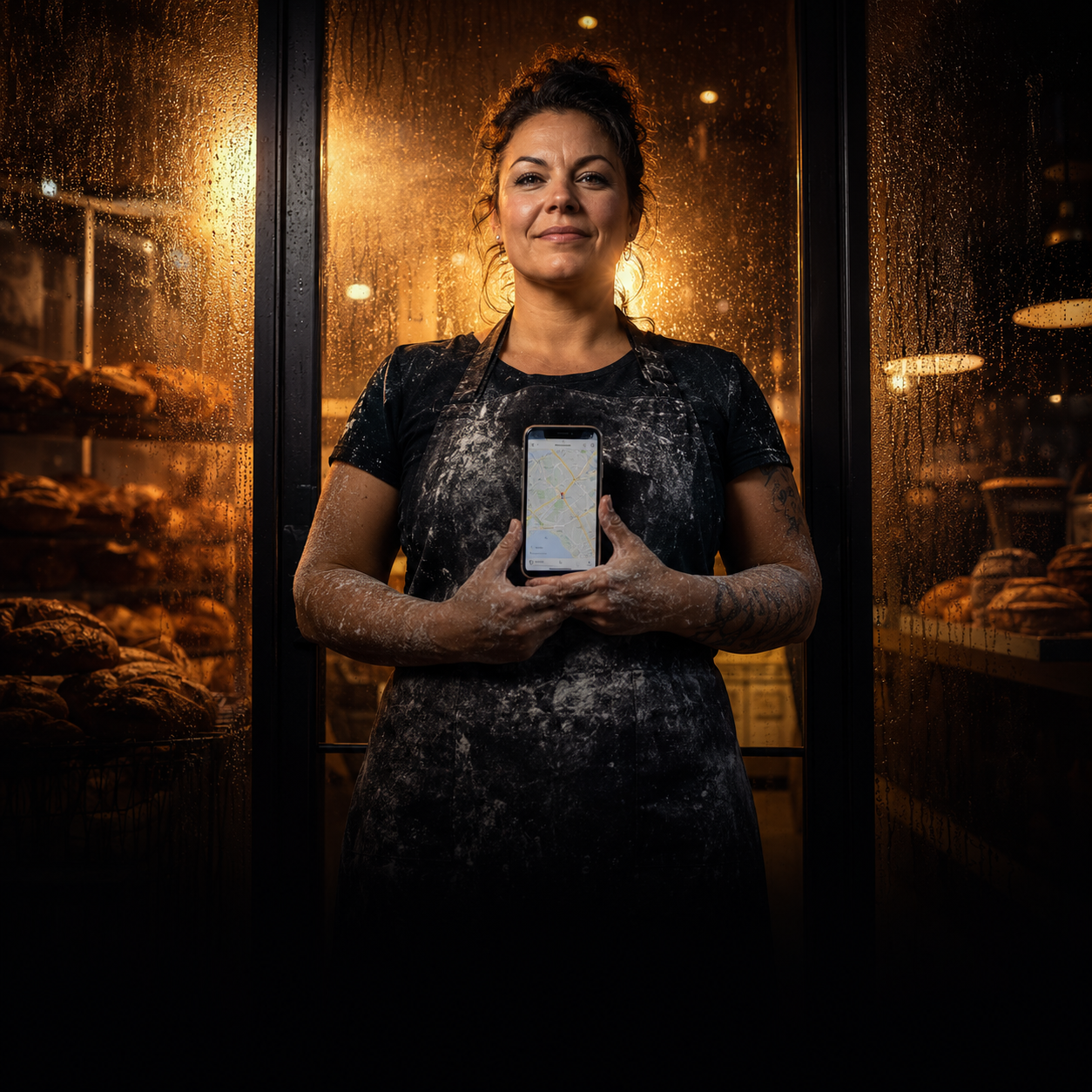
SEO Local for Businesses: How to Dominate Google Maps and Attract Customers in 2026
For business owners managing their own presence and marketing professionals handling multiple local clients.
A customer standing two blocks from your front door just searched for exactly what you sell. Your competitor three miles away appeared first. Here is the uncomfortable part: that competitor spent nothing on ads to get there. According to a 2024 BrightLocal survey of 1,200 local businesses, 42% of Google Maps top-three results belong to companies with zero paid search budget. They are winning on process, not money, and the specific processes are learnable in an afternoon.
This article gives you a concrete playbook for local SEO in 2026: how the Local Pack algorithm ranks businesses, which profile signals move rankings fastest, and why a steady stream of genuine reviews now outperforms Google Ads in 73% of service-category local searches, per Moz's 2024 Local Search Ranking Factors report. Read through once, then work the checklist at each section. By the end, you will have a prioritized action list that costs nothing but time and produces results Google measures within 30 days.
The Strategies Your Competitors Have Not Tried
Why the Local Pack Is the Only Real Estate That Matters
When someone searches "dentist near me" or "Italian restaurant downtown," Google does not return a ranked list of websites. It returns a map with three highlighted results, the Local Pack, above every organic result and, in most mobile views, above the fold entirely. According to Google's own data published in 2023, searches with local intent make up 46% of all Google queries, and 76% of people who search for something nearby on their phone visit a business within 24 hours.
Appearing in that three-result block is the digital equivalent of owning the corner spot on the busiest street in town. Local SEO covers the strategies that improve a business's visibility in geolocated searches within Google and Google Maps. The distinction from general SEO matters: you are not chasing traffic volume, you are chasing intent-ready customers who are already in motion and ready to spend.
What changed between 2023 and 2026 is the competitive density of that space. Businesses that previously relied on foot traffic and word of mouth discovered that 88% of consumer decisions for local services now start with a mobile search, per a 2024 Think with Google study. A business invisible on Maps does not exist for that segment — and in 2026, that segment is most of them.
Three factors determine Local Pack placement, and Google's own documentation on the Google Search Central blog names them explicitly:
- Relevance: how closely your profile and website match what the searcher typed.
- Distance: how close your listed location is to the searcher or the location named in the query.
- Prominence: how well known your business is, measured by reviews, links, and profile completeness.
Businesses that work all three of these pillars consistently appear in the Local Pack even against brands that have been in the market for a decade. A 2024 Whitespark Local Search Ranking Factors study found that Google Business Profile signals account for 36% of the ranking factors for Local Pack results — the single largest category, ahead of on-page website signals at 16% and backlinks at 13%. Knowing where the weight sits tells you exactly where to spend your first hour.
The 3-Step System for Optimizing Your Google Business Profile and Attracting Ready-to-Buy Customers
The average Business Profile is only 57% complete. That 43% gap is where your opportunity lives — and it costs nothing to close. Google Business Profile feeds directly into Maps rankings, and the BrightLocal 2024 Consumer Review Survey found that 87% of consumers read online reviews for local businesses before visiting, with the Business Profile being the first place they look.
The three steps below are ordered by impact, not alphabetically. Do them in sequence.
- Step 1: Complete every field without exception. Business name (exact legal name, no keyword stuffing), address, phone number, website, hours including holiday hours, primary and secondary categories, and a description between 250 and 750 characters that uses your main service keyword plus city name in the first sentence. Google's own help documentation confirms that businesses with complete profiles are 70% more likely to attract location visits. Audit every field today. Blank fields are ranking penalties you chose to give yourself.
- Step 2: Add photos on a weekly schedule. Profiles with more than 100 photos receive 520% more calls and 2,717% more direction requests than the average profile, according to Google's internal data shared at Google Marketing Live 2022. These do not need to be professional shots. Smartphone photos of your team, your work in progress, and your finished product all count.
The algorithm reads upload frequency, not just total volume. One photo uploaded every Tuesday beats 52 photos uploaded in a single session. - Step 3: Post a short update at least once per week. Google Posts are updates between 150 and 300 words that appear directly on your profile. Include your city name and a service keyword in each one. A plumber in Austin posting "We just finished a full bathroom remodel in South Austin" signals geographic relevance directly to the algorithm, stacking on top of the category and address data already in the profile. Treat this like a brief field report, not a press release.
Consistency is the most neglected factor. Many businesses optimize their profile once and stop. The Google algorithm treats ongoing activity as a proxy for business health. A 2024 analysis by Local SEO Guide of 100,000 Google Business Profiles found that profiles updated at least once per week ranked an average of 2.3 positions higher in Local Pack results than profiles untouched for 90 days or more. Two positions in the Local Pack is the difference between appearing and not appearing on most screen sizes.
Why Reviews Now Beat Paid Ads — and How to Build That Advantage Systematically
There is a measurable shift in how Google weights signals for local ranking. Moz's 2024 Local Search Ranking Factors report, based on responses from 149 local SEO practitioners and correlation analysis of real ranking data, found that review signals now account for 16% of Local Pack ranking factors, up from 11% in 2021. That is a 45% increase in weight over three years. Google is putting more trust in real-world social proof, and the trajectory shows no sign of reversing.
This has a direct implication for anyone managing local digital presence: organic credibility is outperforming paid reach in most local service categories. A business with 40 reviews averaging 4.7 stars, with owner responses to each, consistently outranks competitors spending $1,500 per month on Google Ads in categories like home services, healthcare, and food and beverage, per Whitespark's 2024 ranking study. You do not need to outspend your competitors. You need to outcare them on the record — and the process for doing that is entirely within your control.
Building that credibility systematically means following three concrete practices:
- Ask immediately after the transaction. A 2024 BrightLocal study found that 77% of customers will leave a review when asked directly. The ask should come within two hours of the service or purchase, by text message with a direct link to the review form. Response rates drop by 60% when requests are sent 48 hours after the transaction. Build that two-hour text into your close-out routine for every job or sale.
- Respond to every review within 48 hours. Google's own documentation on the Search Central blog states that responding to reviews signals that the business is active and values customer feedback. A Harvard Business School study by Luca (2016) found that a one-star increase in average rating leads to a 5% to 9% increase in revenue for service businesses. Responses to negative reviews specifically correlate with a higher overall star rating because they demonstrate accountability on the record, where every future prospect can read them.
- Maintain NAP consistency across all directories. NAP stands for Name, Address, Phone Number. Google Search Central documentation explicitly lists inconsistent NAP data across platforms as a factor that suppresses local rankings. A 2023 Moz study found that inconsistent NAP data is one of the most common and most damaging technical errors in local SEO — and one of the easiest to fix.
The three pillars covered in this article — profile completeness, review velocity, and NAP consistency — are not independent tactics. They compound. A complete profile earns more impressions. More impressions generate more reviews. Consistent NAP data ensures every signal points to the same business. Complete the profile, post weekly, ask for reviews within two hours of every transaction, and audit your NAP across directories. That is the prioritized action list that costs nothing but time and produces results Google measures within 30 days.
Ready to automate all this? Brainpercent is the all-in-one content platform that generates SEO articles, social posts, and videos for you — on autopilot. Start your free trial or see pricing.
Dicas semanais de conteúdo com IA
Junte-se a profissionais de marketing acompanhando IA, SEO e automação.
Pronto para começar?
Junte-se a milhares de usuários que já estão criando conteúdo incrível com nossas ferramentas baseadas em IA.
Experimente grátis